




Art collecting is inherently future-oriented. Every acquisition shapes not only the present collection, but its trajectory over time. Yet many collecting decisions are made reactively—driven by opportunity, availability, or momentum—without fully considering their long-term implications.
Planning an art collection for the next decade requires a shift in perspective. It asks collectors to move beyond short-term ownership and toward intentional stewardship, where care, coherence, and continuity guide decision-making over time.
Thinking Beyond Immediate Acquisition
Acquisition is often the most visible aspect of collecting, but it is only one stage in an artwork’s lifecycle. Over a decade, works will be stored, moved, installed, loaned, conserved, and potentially recontextualized.
Long-term planning encourages collectors to ask broader questions before acquiring:
- How will this work fit within the collection in five or ten years?
- What conservation or storage needs will it require over time?
- How does it align with the collection’s evolving focus?
By framing acquisitions within a longer horizon, collectors reduce impulsive decisions and build collections with continuity rather than accumulation.
Anticipating Growth and Change
Over ten years, collections inevitably change. Tastes evolve. Artists’ practices develop. Residences are added or sold. Exhibition opportunities arise.
Planning for these changes allows collectors to adapt without disruption. Storage capacity, conservation needs, and logistical support should scale alongside the collection. Anticipation reduces the need for reactive decisions that can compromise preservation or coherence.
The long view treats change as expected—not disruptive.
Planning for Care, Not Just Space
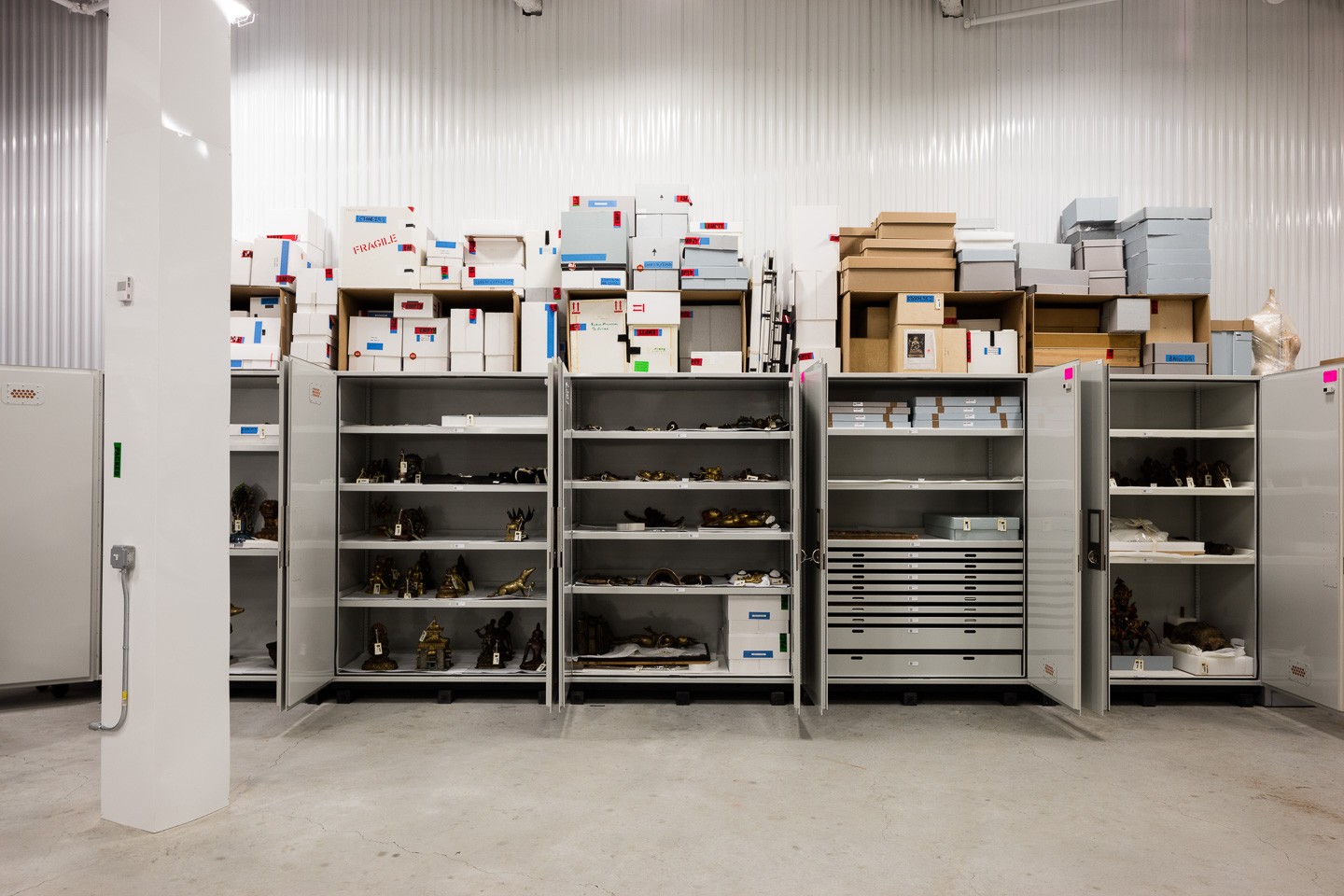
Future planning is not only about where art will be displayed, but how it will be cared for over time. Different materials age differently, and conservation needs increase as works mature.
Collectors planning for the next decade consider:
- Long-term storage environments
- Future conservation assessments
- Handling and movement protocols
- Documentation continuity
By maintaining the majority of a collection in professional care at UOVO Art, collectors ensure that works not currently on display remain protected while retaining flexibility for future use.
Visibility as a Long-Term Asset
As collections evolve, they accumulate history. Exhibition records, condition reports, installation notes, and ownership transitions all contribute to an artwork’s narrative.
Maintaining visibility into this history is essential. Clear documentation ensures that knowledge persists even as circumstances change. It supports future loans, sales, or institutional relationships and protects the integrity of the collection beyond the present owner.
Centralized documentation systems supported by UOVO Art help preserve this continuity over time.
Aligning Collection Strategy With Legacy
For many collectors, long-term planning eventually intersects with legacy—whether through inheritance, donation, sale, or institutional placement.
Legacy-minded planning does not require fixed outcomes. Instead, it focuses on maintaining clarity, condition, and documentation so that future decisions remain flexible. A well-planned collection retains meaning regardless of its eventual path.
Planning with legacy in mind ensures that today’s decisions do not limit tomorrow’s options.
Infrastructure as an Enabler of the Long View
Planning for a decade requires infrastructure. Centralized storage, professional handling, and coordinated documentation create continuity that individual effort alone cannot sustain.
Professional environments like UOVO Art provide the foundation required for long-term planning, allowing collectors to focus on vision rather than logistics. Infrastructure becomes an enabler of flexibility, not a constraint.
Planning as an Ongoing Practice
The long view is not a one-time exercise. It is an ongoing practice that evolves alongside the collection.
Regular reviews of storage, documentation, and strategy allow collectors to adjust thoughtfully rather than reactively. Planning becomes a habit rather than a milestone, ensuring that care remains aligned with growth.
Summary
Planning an art collection for the next decade requires patience, foresight, and structure. It asks collectors to look beyond immediate acquisition and toward continuity, care, and meaning over time.
When collections are planned with the future in mind—and supported by professional infrastructures like UOVO Art—they remain adaptable without losing coherence. Art is protected, decisions are clarified, and legacy remains open rather than constrained.
In the long run, the most enduring collections are not those built quickly, but those guided steadily—through planning that honors both the present moment and the years yet to come.
Need assistance with managing your art collection? Reach out to UOVO today to learn about our full suite of services.